
- Mac Mojave Iso File
- Mac Mojave Iso Download
- Mac Mojave Iso Download For Virtualbox
- Iso Mojave Mac Download
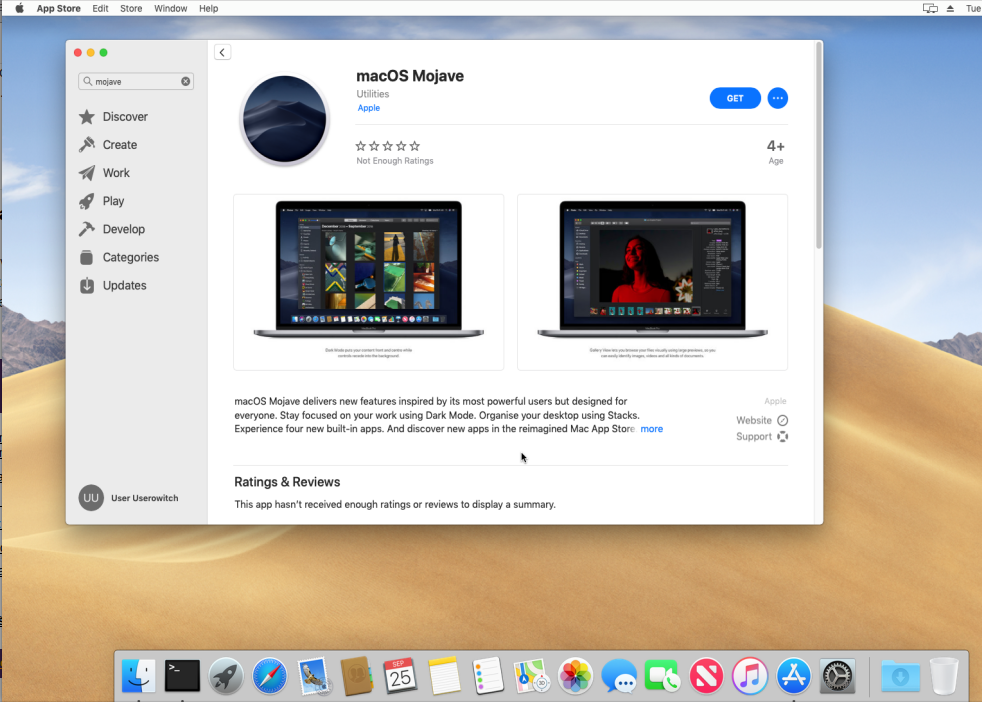
Home » Mac » MacOS Mojave » Download MacOS Mojave 10.14 ISO Image Free Download MacOS Mojave 10.14 ISO Image Free by admin May 13, 2020 257 Views / ( 1 votes, average: 5.00 out of 5). Download Niresh macOS Mojave Free, Download Niresh macOS Mojave free latest version offline setup DMG images. MacOS Niresh Mojave is a professional operating system providing complete support for handling different types of operations. The included features in macOS Mojave are Dynamic Desktop, Desktop Stacks, Screenshots Markups, Screenshot Utility, Continuity Camera, iOS Apps on Mac, The APP Store, Finder, and others. Well, there’s is more to talk about macOS Mojave goodness’s, but the better way to access its features install it on your PC.
macOS High Sierra is a seasoned, robust, and straightforward-to-use operating system developed for your MacBook. With this OS, some of the novel features have been added for the desktop users. macOS High Sierra might not offer diverse underlying differences to the user experience, but there are enough quality changes and they would certainly boost the performance of your Mac. Now you can request Siri: your intelligent assistant to do a variety of innovative things with a more natural voice, but as expected the High Sierra happens to be an update similar to Mac OS X Mountain Lion, Yosemite, and Snow Leopard.
Download Free MacOS Mojave 10.14 Mac Dmg. Click on the button below to start downloading MacOS Mojave 10.14 for mac OS X. We are here to provide to clean and fast download for MacOS Mojave 10.14 dmg. This link is resume able within 24 hours. Keep visiting themacgo the world of dmgs. Mac OS Mojave 10.14.1 ISO & DMG Files Direct Download. August 17, 2020; macOS Mojave 10.14; 8 Comments; The macOS Mojave was the fifteenth release from Apple for.
With this awaited updated, a more convenient file system, APFS or Apple File System, has been made the current default in macOS High Sierra.
APFS is secure, dependable, and pretty stable to handle smart storage systems like solid-state drives (SSD). It advances to some better features like inherent encryption, quick data processing, safe document saves, constant snapshots, and crash safety.
Mac OS High Sierra Download
| Program Details | |
|---|---|
| Setup Name: | macOS HighSierra 10.13.iso |
| Size on Disk: | 5.00 GB (5,379,194,880 bytes). |
| Official: | Apple Inc./apple.com/macos. |
| Editor’s Ratings: | |
| Compatibility: | MacBook & Macintosh (Pro, Mini). |
macOS High Sierra (variant 10.13) is the fourteenth vital appearance in Apple Inc’s. macOS franchise for MacBooks and Macintosh PCs. This time around Apple has radically improved the process that the macOS runs to organise your data, as well as there is an added support for stored photos, sounds, images, and video codecs which mean to meet your progressive data needs, by occupying considerably less space.
APFS that is combined with this latest upgrade boasts an ultra-responsive system and carries a major performance-based promotion for Macs.
It is the replacement, or I might say and enhancement to macOS Sierra and it was revealed at the WWDC 2017 on 5th of June, 2017, preceding El Capitan being released on 25th of September, 2017 while its follower macOS Mojave was unpacked on 24th of September, 2018.
Some Striking Features Are
Noticeable improvements in High Sierra accommodate
- SMB printing readability has considerably been enhanced.
- Better control over Safari with improved privacy and speed.
- Bluetooth appeared as unavailable has been fixed.
- A couple of editing features for your photos have also been added.
- Added 70 new emojis to the pack.
- FileVault-encryption can now be unhitched with APFS volume using a return keychain file.
- It has advanced the reliability of the exchange message sync.
- Mail up-gradation and more.
- Touch-bar for better control over sounds and AirPlay.
A Faster File System
On upgrading the existing OS to High Sierra, your modern flash-based storage system (SSD or HDD with SSD boost) will be transformed to APFS in an automated way. The wholly new system provides noticeable gains in speed and ideal improvements in system’s data-processing speed.
The most noticeable changes in High Sierra involve some significant improvements to the Photos application, such as seamless unification with third-party apps for high-level photo editing.
Besides, some trivial but meaningful enhancements were also being made to Mail handling, including a “Highest Hits” display of searched messages and split-show message-composing when Mail is operating full-screen. The Notes app totals tables and notes that can be pinned to the top of the list, at last, but not least, your most favourite Safari brings more agility to the experience.
Looking for the best ISO to USB burner for Mac? It's possible, but ISO is not native file type in Mac OS X or macOS environment, so you need to use workaround methods or employ a third-party ISO burning utility for Mac to get this done. This article covers three ways to burn ISO to USB stick on a Mac computer, powered by macOS Catalina, Mojave, High Serria and earier Mac OS X systems.
The first thing you need to know is that you can't use an ISO disk image file on a Mac, since Apple primarily uses the DMG format. However, if you merely want to burn ISO to a USB stick, that's definitely possible. The only thing you can't do is run an ISO file on an Apple computer. Let's look at the various ways to burn ISO to USB on a Mac machine.
[Notice]: There are different types of ISO images (Windows, Linux, Raspbian OS, etc.) and they apply different booting schemes. So basically, there is not a perfect software out there that can burn all ISO images successfully. You should try another suggestion if one failed.
[Update 1]: If you have any question during ISO burning process, please check out the FAQ Part at the end of this article.
[Update 2]: New version of UUByte ISO Editor for Mac now supports large Windows 10 ISO image (over 5GB) and macOS Big Sur.
Part 1: How to Burn ISO to USB on Mac with Terminal Software
Terminal is Apple's command line equivalent of Command Prompt in Windows and Terminal in Linux. Using this command line utility, you can burn an ISO file to an external DVD or USB disk. If you did not t have any experience with text command, then this is not recommended because it is too risky to damage the local disk with wrong input. Terminal allows you to do several system-level operations, so don't input anything other than the commands specified in the process outline shown below:
Step 1: Click Terminal icon from the Dock. Or Go to the Applications folder on Mac and find the Terminal app in Utilities folder.
Step 2: Copy the ISO file in a convenient location so your command doesn't have to be too long. Saving it to desktop or downloads folder is usually a good idea. Make sure you remember the name of the ISO file because it will be used in the command.
Step 3: If your ISO file is in your Desktop, then run the following command (press Enter after typing the command): cd desktop
Step 4: Now run the following command (hit Enter after typing): hdiutil burn filename.iso
Step 5: Once you run the command, your ISO file will be burned to the USB drive in your default optical drive. If you haven't inserted a disk, you will be prompted to do so. There is no need to run the command again after inserting the USB.
Mac Mojave Iso File
Cons:
- Dangerous and not safe for beginners.
- Sharp learning curve.
- Bad support for USB 2.0 device.
- Lower success rate.
If you want to avoid any kind of command line work and if you're running one of the newer versions of macOS, then it's better to use a third-party software like the one described in Part 2 below.
Part 2: Easily Burn ISO to USB on Mac via UUByte ISO Editor (Bootable USB Creator)
Sofware being powered by a graphics user interface are always welcomed because of user friendly operation. So the second suggestion in here is UUByte ISO burner software called ISO Editor for Mac. It is popularly regarded as the best ISO burning software for Mac. It allows you to burn, extract, edit, copy and create ISO almost as if it was a native file format on Mac. The utility has been fully tested on a wide range of storage media brands as well as all versions of macOS and Mac OS X.
The biggest advantage is that you do not need any technical expertise whatsoever to use this software. It is highly intuitive, and in a matter of minutes you can burn your ISO to USB or DVD. More importantly, the USB is bootable in default. This flexibility makes it the most user-friendly Mac app for handling ISO disk images in a number of ways. The next section shows you how to easily and quickly burn any ISO file to a disk or drive to create bootable USB on your Mac.
Key Features of ISO Editor for Mac
- Designed by great UI.
- Powerful Burning options.
- Able to make bootable USB or DVD.
- Support the latest macOS Big Sur and Catalina.
- Support new version of Windows 10 ISO (20H2).
- Include other useful ISO tools such as edit, extract and create.
Step 1: Download UUByte ISO Burner for Mac
Download and install ISO Editor for Mac to your computer and launch the program. Click on the Burn module on the first page, which will take you to the ISO burning utility.
Step 2: Insert USB Drive on Mac and Import ISO Image
Insert a USB flash drive into your Mac. Select the ISO file to be burned to the media. If you want a different partition style or file system, make those changes on this page. If you don't know what they mean, leave them in default mode.
Step 3: Start Burning ISO to USB on Mac
Click Burn and the ISO file will be burned to USB drive in around 5 minutes. Please wait and be patient. Make sure the computer not going into sleep mode during the burning process.
[Update]: If the Windows ISO image file is too large (Over 5GB), you will see the following screenshot. This process will cut install.wim file into small parts so it can be copied to FAT32 partition. You have to wait a few minutes for the task to be done.
UUByte ISO Editor for Mac has overall of 95% success rate, so no wasted disks or wasted time when you use this software. The software's reliability, flexibility and speed have made this the go-to Mac application for handling ISO disk image files.
Part 3: Disk Utility - The Default ISO to USB Buner (Solid for Old Macs)
Disk Utility is a built-in tool that comes with Mac OS X and macOS. Using this function, you can easily burn your ISO to a disk after mounting it. Disk Utility is primarily meant to view and repair hard drives and other drives, but also has added functionality. Follow the process below to get your ISO burned to a writable DVD or CD.
Step 1: Go to the Applications folder using Finder or by clicking the shortcut on the bottom right of your screen. From there, go into the Utilities folder and click on Disk Utility to launch the app.

Step 2: Open your ISO file and mount it as a virtual drive. This is done automatically when you click on File >Open Disk Image… in the top menu.
Step 3: When you see your ISO file in the left panel, that means it was mounted properly. You can now insert an USB and click on the Burn option to burn the target ISO file to the USB drive.
This method is only meant for OS X 10.10 and earlier versions. With Mac OS X 10.11 El Capitan, Apple removed the ability to burn ISO to a USB. If you have one of these higher versions, you can try the above methods.
Part 4: Frequently Asked Questions
Q: Why file copying process failed?

The USB will be formatted to FAT32 in order to create a working Windows partition on Mac. This means you can not copy a file larger than 4GB. This is one of the biggest issue with FAT32 file system. We noticed that the latest Windows 10 ISO downloaded from Microsoft.com will over 5GB and the install.wim file is obviously larger than 4GB. That's why file copying process faile during burning process. The solution is to download an old version of Windows 10 from other sources.
Q: Why my USB drive is not bootable by using hdiutil command?
It is a common case for Windows ISO image because this command does not write Windows bootloader to USB drive. You have to format the drive to FAT32 first in Disk Utility.
Q: Can not select USB drive in UUByte ISO Editor?
If the USB drive could be recognized by Mac but not in UUByte ISO Editor, then it is highly possible that your Mac is in Dark Mode. To fix this, please switch to Light mode instead.
Q: Should I format USB stick to NTFS?
No. Mac can only see USB drive formatted with exFAT or MS-FAT. NTFS is not supported by Mac in default. So you can not write ISO image to NTFS USB on Mac. FAT32 is more recommended!
Q: How much time it takes for burning ISO to USB?
For high-speed USB drive (3.0 or 3.1), it can be done within 10 minutes. For low-speed USB drive, it takes much longers (more than 20 minutes).
Q: Can I use UNetbootin for burning Windows 10 ISO?
No. USB will not be bootable if you are using UNetbootin to burn ISO to USB on Mac.
Mac Mojave Iso Download
Q: Can I use Etcher for burning Windows ISO?
Mac Mojave Iso Download For Virtualbox
No. You will receive 'Partition table missing' error when importing Windows ISO into Etcher app on Mac.
Iso Mojave Mac Download
Summary
To be honest, Burning ISO to USB was not challenging at all on Mac in the past. But the situation was changed since the release of macOS. Many apps was not supported or updated to Catalina, Mojave or High Serria. So for the new Mac computer, UUByte ISO Editor is the best option out there in 2020.