
This guide covers how to install the Lotus applications and launch a Lotus Node.. This guide covers installing lotus, lotus-miner and lotus-worker to your computer, and then runs through setting up a Lotus node. For information on running the miner, check the Lotus Miner documentation.
Get Carthage by running brew install carthage or choose another installation method. Create a Cartfile in the same directory where your.xcodeproj or.xcworkspace is. List the desired dependencies in the Cartfile, for example: github 'Alamofire/Alamofire' 4.7.2 Run carthage update -use-xcframeworks. # Lotus: install and setup. This guide covers how to install the Lotus applications and launch a Lotus Node. This guide covers installing lotus, lotus-miner and lotus-worker to your computer, and then runs through setting up a Lotus node. For information on running the miner, check the Lotus Miner documentation. # Minimal requirements.
# Minimal requirements
To run a Lotus node, your computer must have:
If you perform a fresh install of Xcode, you will also need to add the commandline tools by running xcode-select-install on the terminal. While OS X comes with a large number of Unix utilities, those familiar with Linux systems will notice one key component missing: a package manager. Install homebrew if you don't already have it, then: $ brew install git. Apple ships a binary package of Git with Xcode. Binary installer. Tim Harper provides an installer for Git. The latest version is 2.31.0, which was released 8 days ago, on 2021-03-16. Building from Source.
- macOS or Linux installed. Windows is not yet supported.
- 8-core CPU and 32 GiB RAM. Models with support for Intel SHA Extensions (AMD since Zen microarchitecture, or Intel since Ice Lake) will significantly speed things up.
- Enough space to store the current Lotus chain (preferably on an SSD storage medium). The chain grows at approximately 12 GiB per week. The chain can be also synced from trusted state snapshots and compacted.
WARNING

These are the minimal requirements to run a Lotus node. Hardware requirements for Miners are different.
# Linux
The following instructions are specific to Linux installations. Head to the macOS section if you want to install Lotus on a Mac.
# Software dependencies
You will need the following software installed to install and run Lotus.
# System-specific
Building Lotus requires some system dependencies, usually provided by your distribution.
Arch:
Ubuntu/Debian:
Fedora:
OpenSUSE:
Amazon Linux 2:
Mac Xcode Install Brew
# Rustup
Lotus needs rustup(opens new window). The easiest way to install it is:
TIP
Make sure your $PATH variable is correctly configured after the rustup installation so that cargo and rustc are found in their rustup-configured locations.
# Go
To build Lotus, you need a working installation of Go 1.15.5 or higher(opens new window):
Make sure that /usr/local/go/bin is in your PATH. If you are running into problems, check the official Go installation instructions(opens new window) for your operating system.
# Build and install Lotus
Once all the dependencies are installed, you can build and install the Lotus suite (lotus, lotus-miner, and lotus-worker).
Clone the repository:
To join mainnet, checkout the master branch and latest release(opens new window).
If you are changing networks from a previous Lotus installation or there has been a network reset, read the Switch networks guide before proceeding.
For networks other than mainnet, look up the current branch or tag and commit for the network you want to join in the Filecoin networks dashboard(opens new window), then build Lotus for your specific network below.
Currently, the master branch corresponds to mainnet.
If you are in China, check out the specific tips.
Depending on your CPU model, you will want to export additional environment variables:
If you have an AMD Zen or Intel Ice Lake CPU (or later), enable the use of SHA extensions by adding these two environment variables:
See the Native Filecoin FFI section for more details about this process.
Some older Intel and AMD processors without the ADX instruction support may panic with illegal instruction errors. To fix this, add the
CGO_CFLAGSenvironment variable:This is due to a Lotus bug that prevents Lotus from running on processor without
adxinstruction support, and should be fixed soon.Build and install Lotus:
This will put
lotus,lotus-minerandlotus-workerin/usr/local/bin.lotuswill use the$HOME/.lotusfolder by default for storage (configuration, chain data, wallets, etc). See advanced options for information on how to customize the Lotus folder.You should now have Lotus installed. You can now start the Lotus daemon.
# Native Filecoin FFI
Some newer CPU architectures like AMD's Zen and Intel's Ice Lake, have support for SHA extensions. Having these extensions enabled significantly speeds up your Lotus node. To make full use of your processor's capabilities, make sure you set the following variables before building from source:
This method of building does not produce portable binaries. Make sure you run the binary on the same computer as you built it.
# Systemd service files
Lotus provides generic Systemd service files. They can be installed with:
WARNING
Provided service files should be inspected and edited according to user needs as they are very generic and may lack specific environment variabes and settings needed by the users.
One example is that logs are redirected to files in /var/log/lotus by default and not visible in journalctl.
# macOS
These instructions are specific to macOS. If you are installing Lotus on a Linux distribution, head over to the Linux section.
# XCode Command Line Tools
Lotus requires that X-Code CLI tools be installed before building the Lotus binaries.
Check if you already have the XCode Command Line Tools installed via the CLI, run:
If this command returns a path, you can move on to the next step. Otherwise, to install via the CLI, run:
To update, run:
# Install Homebrew
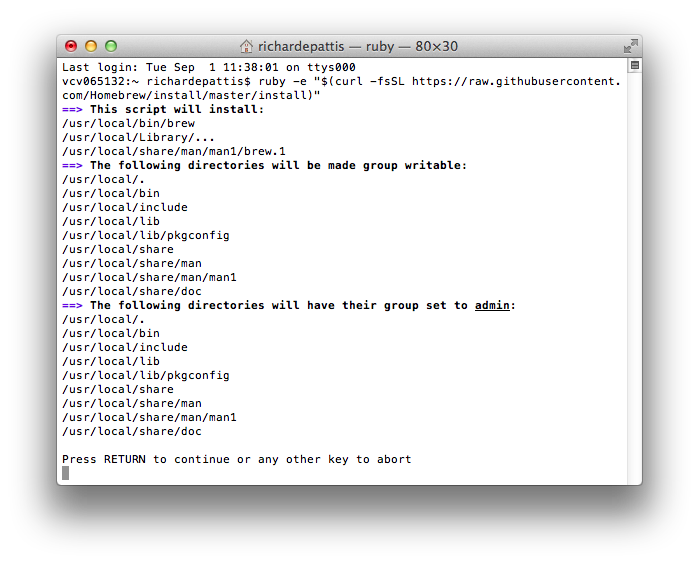
We recommend that MacOS users use Homebrew(opens new window) to install each of the necessary packages.
Use the command
brew installto install the following packages:Clone the repository:
To join mainnet, checkout the master branch and browse for the latest release(opens new window).
If you are changing networks from a previous Lotus installation or there has been a network reset, read the Switch networks guide before proceeding.
To join networks other than mainnet, look up the correct branch or tag and commit for the network you want to join in the Filecoin networks dashboard(opens new window), then build Lotus for your specific network below.
Currently, the master branch corresponds to mainnet.
If you are in China, check out the specific tips.
Some older Intel and AMD processors without the ADX instruction support may panic with illegal instruction errors. To fix this, add the
CGO_CFLAGSenvironment variable:This is due to a Lotus bug that prevents Lotus from running on processor without
adxinstruction support, and should be fixed soon.Build Lotus:
You should now have Lotus installed. You can now start the Lotus daemon.
# Start the Lotus daemon and sync the chain
The lotus application runs as a daemon and a client to control and interact with that daemon. A daemon is a long-running program that is usually run in the background.
When using mainnet, we recommend to start the daemon syncing from a trusted state snapshot. In any case, you can start the deamon with the following command:
During the first run, Lotus will:
- Setup its data folder at
~/.lotus. - Download the necessary proof parameters. This is a few gigabytes of data that is downloaded once.
- Import the snapshot (if specified) and start syncing the Lotus chain.
The daemon will start producing lots of log messages right away. From this point, you will have to work on a new terminal and lotus commands will communicate with the running daemon.
TIP
Do not be concerned by the number of warnings and sometimes errors showing in the logs. They are a normal part of the daemon lifecycle as it participates in the global distributed consensus network.
If you used snapshots, subsequent daemon starts can proceed as normal without any options:
For more information about syncing and snapshots, see the Chain management section.
We recommend waiting until the syncing process has completed, which should be relatively fast when using trusted state snapshot imports:
# Interact with the daemon
The lotus command allows you to interact with a running Lotus daemon. The lotus-miner and lotus-worker commands work in the same way.
Lotus comes with built-in CLI documentation:
For example, after your Lotus daemon has been running for a few minutes, use lotus to check the number of other peers that it is connected to in the Filecoin network:
# Stop the Lotus daemon
In order to gracefully stop the running lotus daemon (required when restarting the daemon to update Lotus), use the following command:
Obtaining GNU PSPP
Brew Install Xcode Mac 10
PSPP is GNU software. You can obtain it the same way as with anyGNU software. PSPP should work on most modern computers and most operatingsystems. Systems which have been known to work include:GNU/Hurd,GNU/Linux,Darwin (Mac OS X), OpenBSD,NetBSD, FreeBSD, and Windows.
Binaries
GNU Linux
We do not distribute precompiled binaries of PSPP. Computers come with so many different archtectures, kernels, operating systems that it would not be feasible for us to do so. However most modern operating systems come with PSPP pre-packaged. To install it, you simply type apt-get install pspp in the case of Debian derived systems; or yum install pspp in the case of Red Hat derived systems.
Windows
For PSPP versions prior to October 2020, Harry Thijssen provides installers or all downloadable files. The windows version is build as cross compile build on openSUSE. There is also a nightly build with development versions.
MacOS
There are three ways to install PSPP on MacOS.
- The Application bundle provides the gui version via a normal installer. If you do not know what XCode is - go for this one.
- MacPorts. Run
port install pspp-develto get the latest and most featureful version of PSPP orport install psppto get an older but possibly better tested version (more information). - Homebrew. The PSPP brew tap also includes a description how to install the stable or the development version of PSPP.
Please note: Because the PSPP developers have not prepared these binaries, we cannot in general vouch for them.
Source
If you want to compile and install PSPP yourself, you can get the source code fromhttp://ftpmirror.gnu.org/pspp.Should this link be unavailable or unreasonably slow, please select a local mirror site.Once you have downloaded the tarball, refer to the INSTALLfile for installation instructions.
Development Versions
PSPP is under continual improvement. You can get development versions if you are interested to see what the developers are working on. Development versions have undergone less testing than released versions.
You can fetch the latest development sources fromthe Savannah GITrepository.The installationprocedure is more complex than for released versions, so werecommend this only for developers.
Brew Install Xcode Osx
Automated builds of the developmentversions are performed typically every day.